The History of Sabarimala Temple
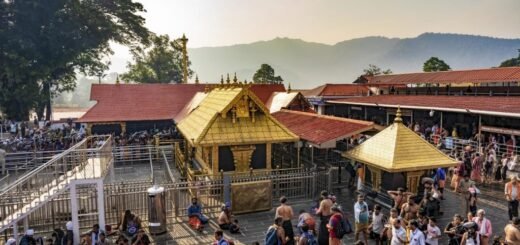
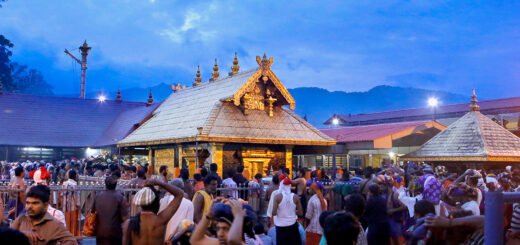
Nestled deep within the lush forests of the Western Ghats in Kerala, the Sabarimala Temple stands as one of the most sacred pilgrimage sites in India. Dedicated to Lord Ayyappa, the temple attracts millions of devotees every year, transcending religion, caste, and social status.
The history of Sabarimala is a fascinating blend of mythology, devotion, and centuries-old tradition — an enduring symbol of faith and unity. This sacred hill shrine, perched at an altitude of about 4,000 feet above sea level, holds stories that date back thousands of years, weaving together divine legends and historical events.
Origins of Sabarimala: The Divine Birth of Lord Ayyappa
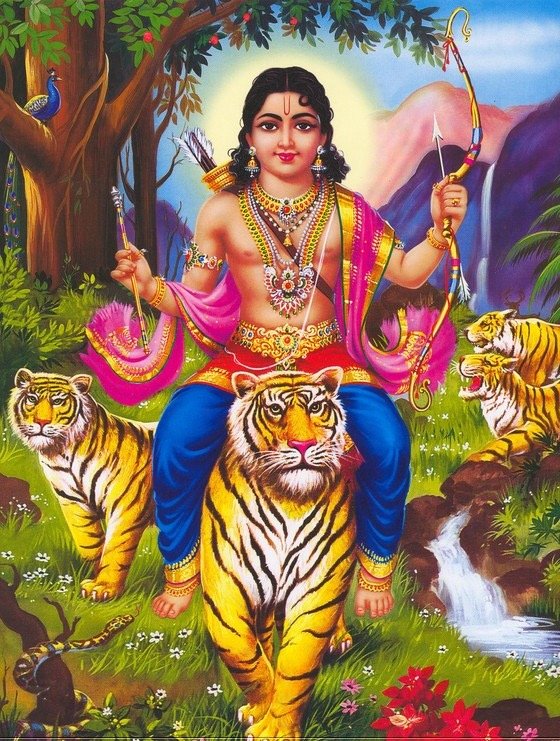
The roots of Sabarimala Temple history trace back to the legend of Lord Ayyappa, the celibate god of discipline and devotion. According to Hindu mythology, Lord Ayyappa was born from the divine union of Lord Shiva and Mohini, the female incarnation of Lord Vishnu. This unique birth made him the embodiment of both Shiva and Vishnu — a symbol of unity between different divine energies.
The story goes that Ayyappa was born to destroy the demoness Mahishi, who had received a boon that only a son born of Shiva and Vishnu could defeat her. After years of meditation and training under King Rajashekhara of Pandalam, Ayyappa fulfilled his destiny by slaying Mahishi at Erumeli, near present-day Sabarimala.
The Founding of the Sabarimala Temple
After fulfilling his divine purpose, Lord Ayyappa decided to retreat to the forests for eternal meditation. Before departing, he instructed King Rajashekhara to construct a temple at Sabarimala, where he would reside in the form of a deity.
The king, guided by a divine light (believed to be the Makara Jyothi), reached the top of the hill and built the shrine following Ayyappa’s instructions. The temple was designed to represent simplicity and equality — reflecting Ayyappa’s message that true devotion lies in purity of heart and self-discipline.
Thus, the Sabarimala Temple was established — a place where devotees could seek liberation (moksha) through austerity, pilgrimage, and surrender to Lord Ayyappa.
The Philosophy and Ideals of Sabarimala
The spiritual foundation of Sabarimala’s history lies in its philosophy of equality, devotion, and discipline. Lord Ayyappa is revered as “Manikanta Swamy”, a celibate deity who symbolizes self-control and detachment from worldly pleasures.
The temple is unique because it welcomes devotees of all castes and religions, as long as they follow the 41-day vratham — a strict period of fasting and spiritual observance before the pilgrimage. During this period, devotees refrain from non-vegetarian food, alcohol, and worldly desires.
They wear simple black or blue clothes, walk barefoot, and address each other as “Swami,” signifying that every pilgrim is equal before Lord Ayyappa. This practice remains one of the most powerful expressions of social equality in Indian religious tradition.
Pathinettam Padi: The Eighteen Sacred Steps
One of the most significant aspects of Sabarimala Temple history is the Pathinettam Padi — the 18 sacred steps leading to the temple’s sanctum sanctorum (Sannidhanam). Each of these steps holds deep symbolic meaning:
- The first five represent the five human senses.
- The next eight represent human emotions such as love, anger, jealousy, and desire.
- The next three stand for the three Gunas — Sattva (purity), Rajas (activity), and Tamas (inertia).
- The last two represent Vidya (knowledge) and Avidya (ignorance).
Only those who carry the Irumudi Kettu — a twin-compartment offering bag — are allowed to climb these sacred steps. Symbolically, ascending the Pathinettam Padi represents conquering human weaknesses and reaching divine realization.
Historical Evidence and Cultural Roots
While much of Sabarimala’s origin is rooted in mythology, historians have found traces of its connection to ancient Dravidian traditions and tribal worship. Archaeological studies suggest that the area around Sabarimala and Pamba was once home to forest tribes who worshipped nature and hill deities.
Over time, these local beliefs merged with Vedic traditions, giving rise to the Ayyappa cult that exists today. The Pandalam royal family, believed to be descendants of the ancient Pandya dynasty, played a major role in shaping the temple’s early history and rituals.
There are also references in ancient Tamil literature, particularly in the Sangam period, that describe Ayyanar and Ayyappa as guardian deities of the forests — further suggesting that the cult has pre-Vedic origins.
The Evolution of the Sabarimala Pilgrimage
In earlier centuries, the Sabarimala pilgrimage was a difficult and dangerous journey through dense forests inhabited by wild animals. Pilgrims traveled in groups, chanting hymns and carrying offerings for Lord Ayyappa.
With the construction of base camps at Erumeli, Pamba, and Nilakkal, the journey became more structured. The route from Pamba to Sannidhanam (about 5 km) remains a sacred trek, symbolizing the spiritual journey from the material world to divine consciousness.
Over the years, Sabarimala evolved into one of the largest annual pilgrimages in the world — with millions of devotees participating during the Mandala season (November–January), culminating in the Makaravilakku festival.
The Makara Jyothi and Its Connection to History
The Makara Jyothi, the celestial light that appears on the day of Makaravilakku, is a central part of Sabarimala’s history and mystique. Devotees believe it to be a divine manifestation of Lord Ayyappa himself, marking his eternal presence at Sabarimala.
Historically, the light was associated with ancient tribal rituals at Ponnambalamedu, a nearby hill. Over time, this phenomenon became a powerful symbol of faith for devotees, merging folklore, ritual, and devotion into one of the most revered events in Indian spiritual culture.
Modern History and Developments
The modern era of Sabarimala Temple began in the 20th century when the Travancore Devaswom Board took over the administration of the shrine. Infrastructure improvements, roads, and facilities were gradually introduced to accommodate the growing number of pilgrims.
In 1950, the temple suffered significant damage due to a fire but was rebuilt soon after. The idol of Lord Ayyappa, crafted in Panchaloha (five-metal alloy), was reinstated, and the temple reopened with renewed devotion.
In recent years, digital systems like Sabarimala Online Booking and the Virtual Q have made crowd management and darshan scheduling more efficient, while still preserving the sanctity and traditions of the pilgrimage.
The Message of Sabarimala Through History
The history of Sabarimala is not just the story of a temple — it is the story of faith that unites millions. The temple stands as a symbol of spiritual discipline, social equality, and religious harmony.
Lord Ayyappa’s message, “Tat Tvam Asi” — meaning “You are that” or “God dwells within you” — reminds every devotee that the ultimate pilgrimage is the one that leads inward, toward self-realization.
Conclusion
The history of Sabarimala Temple is a timeless tale that continues to inspire generations. From its divine origins in mythology to its evolution into a global pilgrimage center, Sabarimala remains a sacred beacon of devotion and unity.
Each pilgrim who climbs its 18 sacred steps participates in an ancient spiritual journey — one that transcends religion, culture, and time itself.
As millions chant “Swamiye Saranam Ayyappa,” the spirit of Sabarimala lives on — reminding the world that true faith is not in rituals or rewards, but in surrendering to the divine light within.
Swamiye Saranam Ayyappa!